Bare Root Tree Profiles
Welcome to our Bare Root Tree Profile page. Here, you’ll discover information on a wide array of trees available through our community initiative, helping you select the perfect addition to your landscape.
- Detailed Descriptions: Click each tree to view its characteristics, growth requirements, and environmental benefits.
- Usage Tips: Learn how to effectively incorporate trees into your space for aesthetics, shade, or ecological benefits.
- Care Guides: Find essential care instructions to ensure your trees thrive and contribute to a sustainable environment.
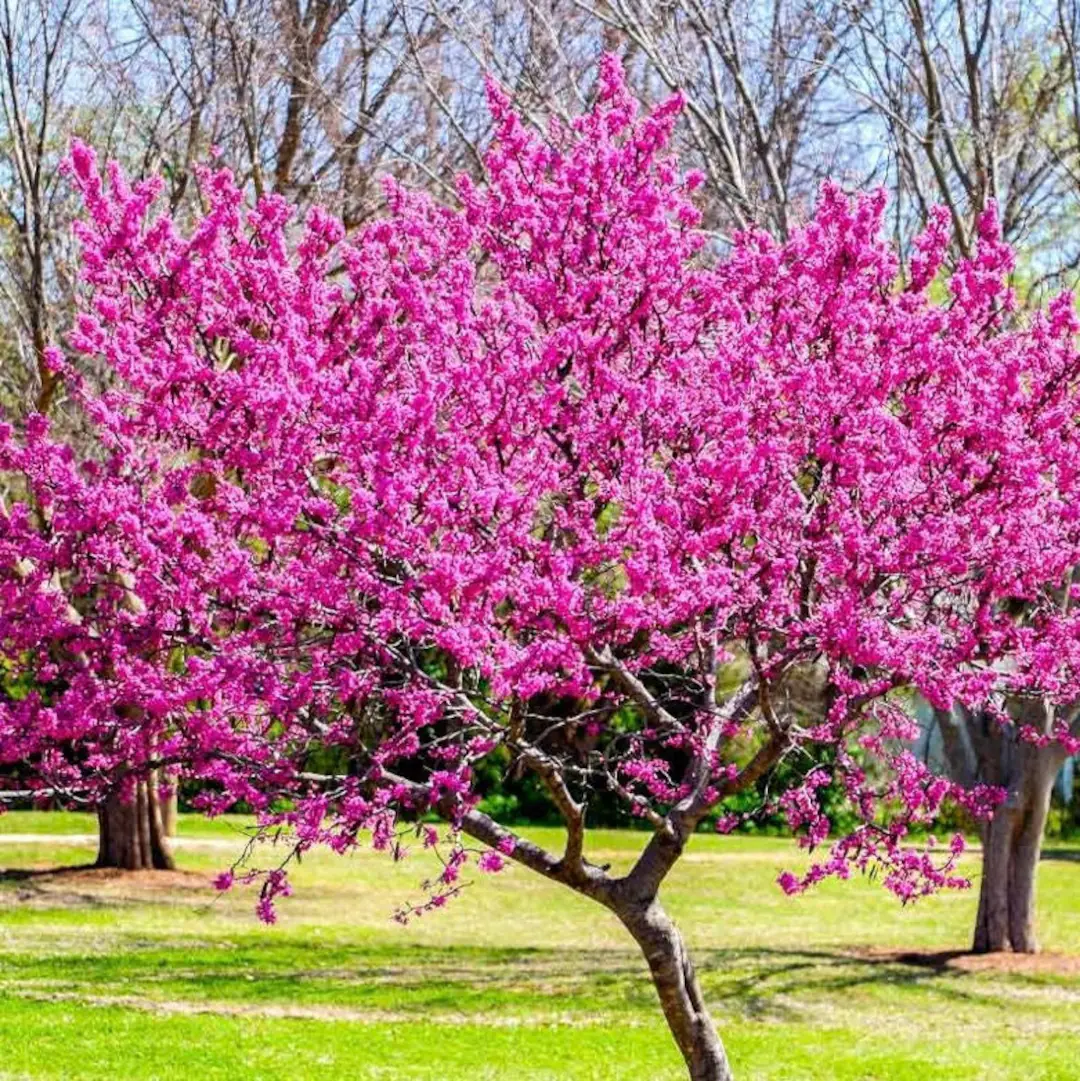
Eastern Redbud
The Eastern Redbud is a small, ornamental tree known for its stunning early spring display of pink to purple flowers. It is native to eastern North America and is often planted for its beauty and ability to attract pollinators. The Eastern Redbud makes an excellent feature tree in residential landscapes and parks.
Heart-shaped leaves that emerge reddish in spring, turn green in summer, and yellow in the fall
Develops flat, brown seed pods that may persist into winter
Grows at a medium rate (30–60 cm each year)
Typically lives 50–70 years under ideal conditions
6–9m tall approx.
Prefers full sun to partial shade (at least 4–6 hours of sunlight each day)
Grows best in well-drained soils; adaptable to a range of soil types including loamy and sandy soils, but prefers slightly acidic conditions
Can be susceptible to canker, verticillium wilt, and leaf spots
Pruning is recommended to maintain structure and remove dead or crossing branches. Best done after flowering in late spring
Best planted in a sheltered location protected from strong winds. Suitable for smaller yards due to its compact size. Avoid planting near underground infrastructure such as water lines, gas lines, or hydro services.
Remember to obtain locates from ON1Call (1-800-400-2255) before the tree is planted to avoid damaging any underground utilities.
A Quick Guide to Planting Bare Root Trees
Planting bare root trees is a fantastic way to bring beauty, shade, and life to your backyard while helping the environment. Trees filter our air, provide habitat for wildlife, and even hold the promise of childhood adventures with treehouses. Here’s how you can plant a tree with ease and ensure it thrives:
Plan Ahead
Timing is everything. Plant your tree during the dormant seasons—spring or fall. Visualize your yard and consider your tree’s future height and shape. Avoid planting under utility lines and keep a safe distance from structures:
- Small Trees (<7m): 2m away from lines, 3m from your home.
- Medium Trees (7-18m): 6m from lines, 4m from home.
- Large Trees (>18m): 12m away from lines, 5m from home.
Prepare the Spot
Scope out the area before picking up your tree. Clear a 50cm radius of grass and weeds. Dig a hole twice the size of the root system—an ideal home for your tree’s roots.
Minimize Stress
During transport, keep roots moist. This is crucial. Think wet burlap or mulch to shield them. Don’t let branches get bruised—handle with care.
Planting Time
Get that tree in the ground as soon as it arrives. Straighten out its roots, letting them fan out comfortably. Protect them from direct sun and winds to prevent drying out. Place the root crown on a mound in the hole, fill halfway with soil, stomp down to remove air pockets, fill with water, then top off with soil. Shape a ridge around the base to help with watering.
TLC – Water, Stake, Mulch
Water your tree deeply, especially during dry spells. Mulch around the base to keep moisture in, but leave space around the trunk to prevent rot. Stake if needed for support against winds.
Remember to visit OntarioOneCall before you dig to avoid utilities. With these easy steps, your tree will flourish and contribute to Carleton Place, one tree at a time.